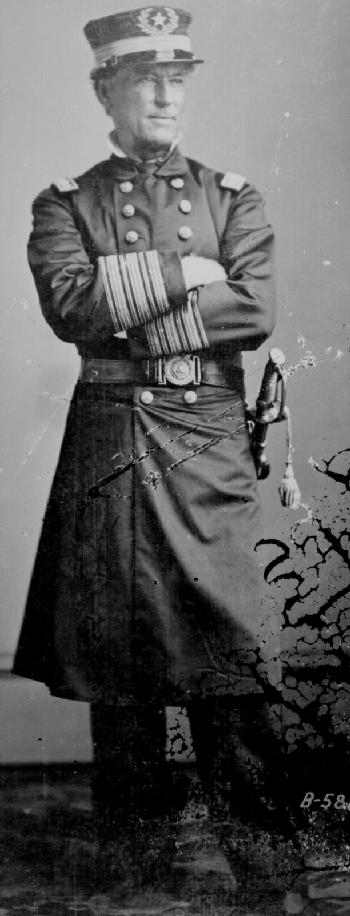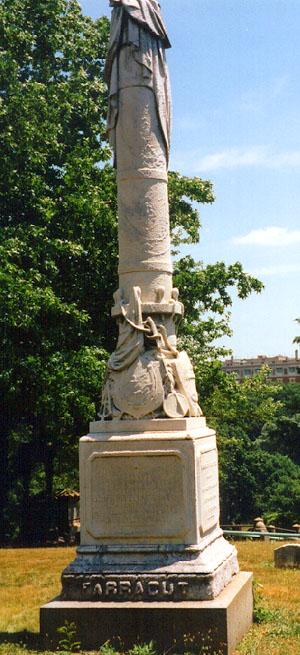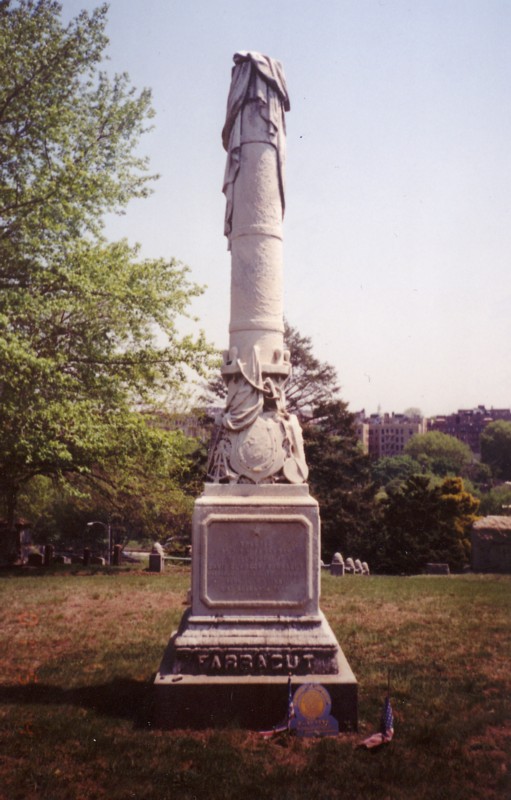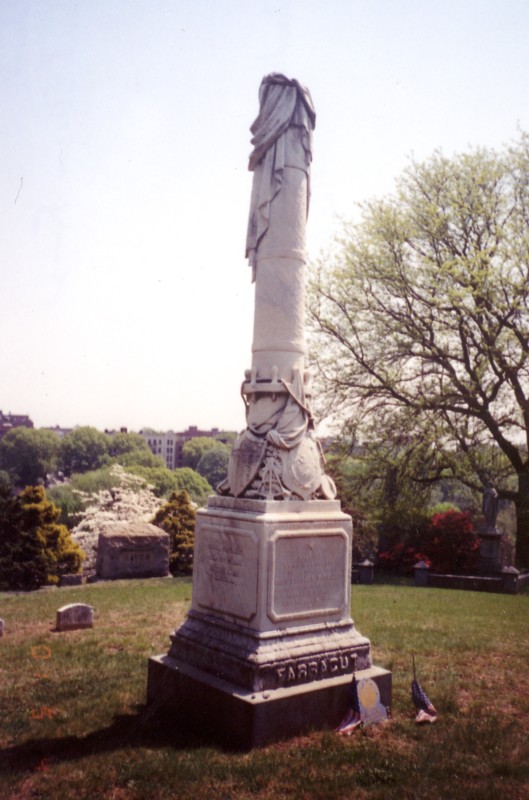
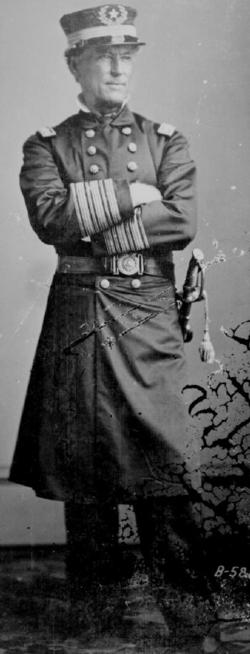
Civil War Union Navy Admiral. The Union's most renowned Naval figure, he was the first United States Navy officer to be promoted to the rank of Admiral. Born at Campbell's Station, near Knoxville, Tennessee, after his parents died, he was adopted by United States Navy officer David Porter (and thus became a step-brother to future Union Navy Admiral David Dixon Porter). Following the customary practice of the day, he entered the Navy while a nine-year-old midshipman on December 17, 1810. While only 12 years old, he was given command of a captured British whaling ship which had been taken by his ship, the frigate "USS Essex" during the War of 1812, and brought her safely to port. He made a great contribution to the Union victory in the Civil War and was to write a famous page in the history of the United States Navy. In command of the West Gulf Blockading Squadron, with his flagship the "USS Hartford," he disproved the theory that forts ashore held superiority over Naval forces, when on April 29, 1862, he ran past Fort Jackson and Fort St. Philip and the Chalmette, Louisiana, batteries to take the city of New Orleans, Louisiana. His country honored him by creating for him the rank of Rear Admiral on July 16, 1862, a rank never before used in the Navy. On August 5, 1864, Farragut won a great victory in the Battle of Mobile Bay. At that point in the war, Mobile, Alabama, was the Confederacy's last major port open on the Gulf of Mexico. The bay was heavily-mined (tethered Naval mines were known as "torpedoes" at the time). Farragut ordered his fleet to enter the bay. When one ship struck a mine, the others began to pull back, but Farragut rose to the occasion and allegedly shouted out the order, "Damn the torpedoes, full speed ahead!" The fleet succeeded in entering the bay, and the heroic quote became famous. David Farragut then subdued the heavy shore batteries at Fort Morgan and Fort Gaines and defeated the Confederate squadron of Confederate Admiral Franklin Buchanan to complete the Union victory. Farragut became America's first Vice Admiral on December 23, 1864. He was made a full Admiral in 1866 and given command of the European Squadron, which was to be his last active service. He died at the age of 69 in 1870 in Portsmouth, New Hampshire. Numerous destroyers have since been named "USS Farragut" in his honor, and he has been depicted on United States postage stamps twice; first on the $1 stamp of 1903, and then on a 32 cent stamp in 1995. Farragut State Park in Idaho is named after him. During World War II, it was used as a Naval base for basic training.
Civil War Union Navy Admiral. The Union's most renowned Naval figure, he was the first United States Navy officer to be promoted to the rank of Admiral. Born at Campbell's Station, near Knoxville, Tennessee, after his parents died, he was adopted by United States Navy officer David Porter (and thus became a step-brother to future Union Navy Admiral David Dixon Porter). Following the customary practice of the day, he entered the Navy while a nine-year-old midshipman on December 17, 1810. While only 12 years old, he was given command of a captured British whaling ship which had been taken by his ship, the frigate "USS Essex" during the War of 1812, and brought her safely to port. He made a great contribution to the Union victory in the Civil War and was to write a famous page in the history of the United States Navy. In command of the West Gulf Blockading Squadron, with his flagship the "USS Hartford," he disproved the theory that forts ashore held superiority over Naval forces, when on April 29, 1862, he ran past Fort Jackson and Fort St. Philip and the Chalmette, Louisiana, batteries to take the city of New Orleans, Louisiana. His country honored him by creating for him the rank of Rear Admiral on July 16, 1862, a rank never before used in the Navy. On August 5, 1864, Farragut won a great victory in the Battle of Mobile Bay. At that point in the war, Mobile, Alabama, was the Confederacy's last major port open on the Gulf of Mexico. The bay was heavily-mined (tethered Naval mines were known as "torpedoes" at the time). Farragut ordered his fleet to enter the bay. When one ship struck a mine, the others began to pull back, but Farragut rose to the occasion and allegedly shouted out the order, "Damn the torpedoes, full speed ahead!" The fleet succeeded in entering the bay, and the heroic quote became famous. David Farragut then subdued the heavy shore batteries at Fort Morgan and Fort Gaines and defeated the Confederate squadron of Confederate Admiral Franklin Buchanan to complete the Union victory. Farragut became America's first Vice Admiral on December 23, 1864. He was made a full Admiral in 1866 and given command of the European Squadron, which was to be his last active service. He died at the age of 69 in 1870 in Portsmouth, New Hampshire. Numerous destroyers have since been named "USS Farragut" in his honor, and he has been depicted on United States postage stamps twice; first on the $1 stamp of 1903, and then on a 32 cent stamp in 1995. Farragut State Park in Idaho is named after him. During World War II, it was used as a Naval base for basic training.
Bio by: Edward Parsons
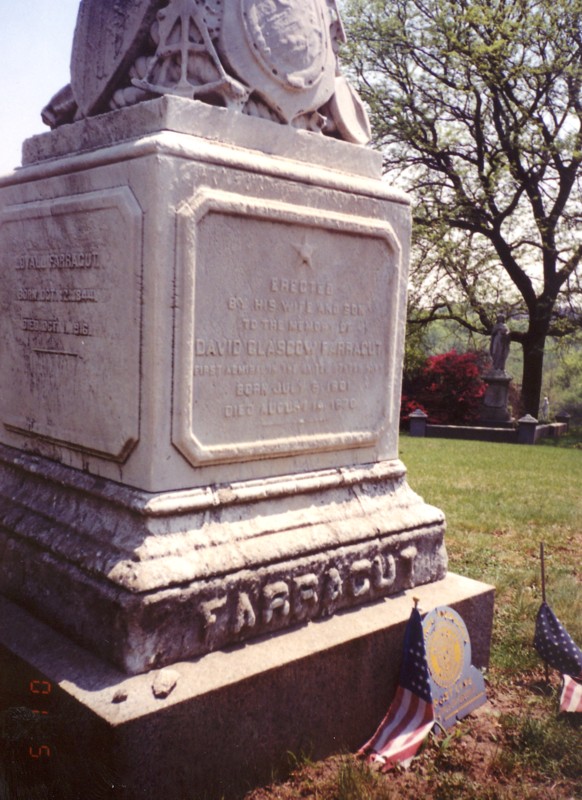
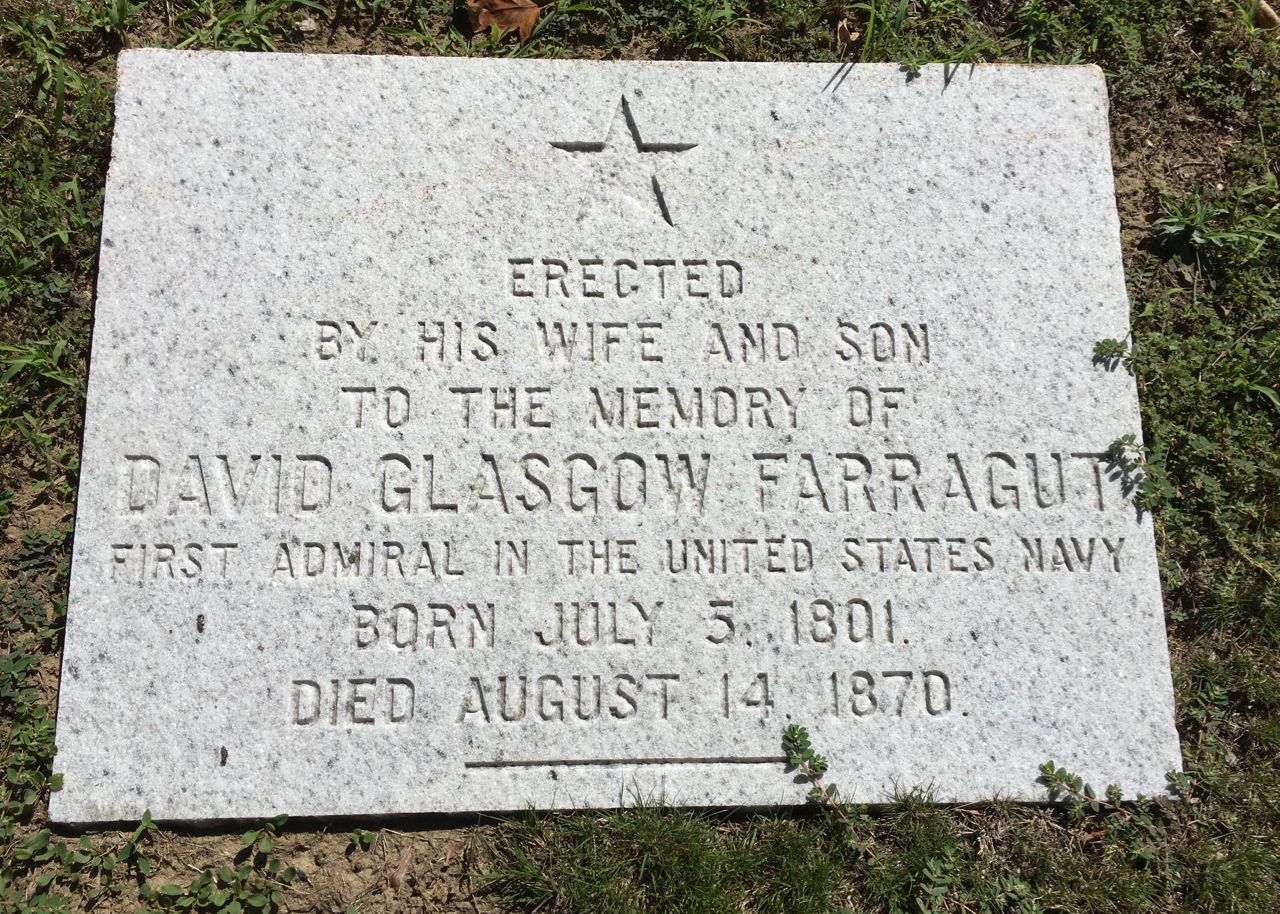
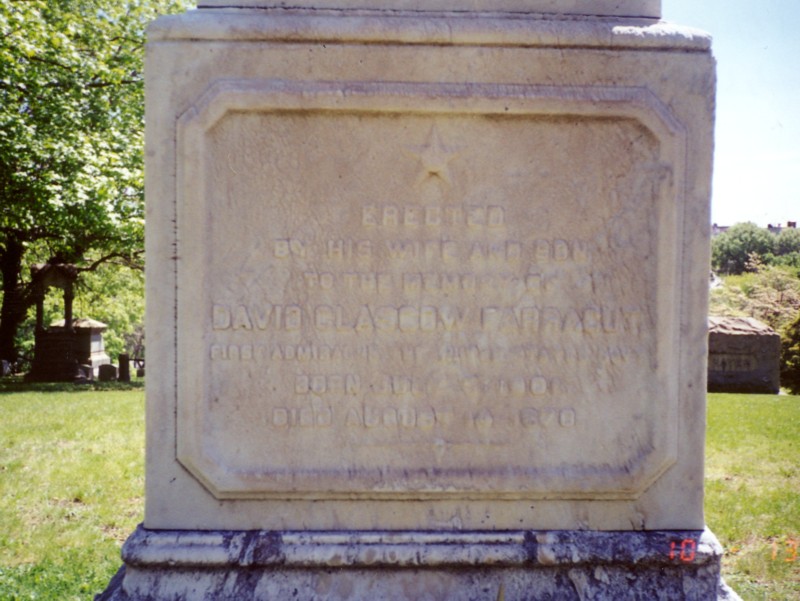
Inscription
ERECTED
BY HIS WIFE AND SON
TO THE MEMORY OF
DAVID GLASGOW FARRAGUT
FIRST ADMIRAL IN THE UNITED STATES NAVY
Family Members


Other Records
Advertisement
See more Farragut memorials in:
Records on Ancestry
Sponsored by Ancestry
Advertisement