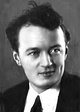
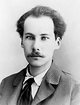
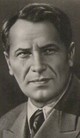
Afinogenov, Alexander b. April 4, 1904 d. October 29, 1941 Playwright. One of the more talented Soviet playwrights to emerge in the years before World War II, he managed to retain his individuality in the face of Stalinist repression. Alexander Nikolayevich Afinogenov was born in Skopin, Russia, and raised in Yaroslavl. He had an early interest in literature, turning out three books of poetry while still in his teens. At 18 he joined the Communist Party and a year later his first play, "Robert Tim", was staged at Moscow's politically-oriented...[Read More] (Bio by: Robert Edwards) Novodevichy Cemetery, Moscow, Moscow Federal City, Russian Federation Plot: Section 1, Row 20
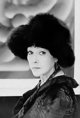
Akhmadulina, Bella b. April 10, 1937 d. November 29, 2010 Poetess. She created several well received collections of verse which often dealt with the mundane events of everyday life while trying to avoid the political difficulties of writing in the Soviet Union. Born Izabella Akhatovna Akhmadulina, she was raised initially in Moscow then lived with her family in Kazan during World War II; starting to write at an early age, she saw some of her poems published while still a teenager. Bella, as she was commonly known, studied at Moscow's Gorky Literary...[Read More] (Bio by: Bob Hufford) Novodevichy Cemetery, Moscow, Moscow Federal City, Russian Federation
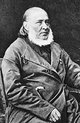
Aksakov, Sergei b. October 1, 1791 d. May 12, 1859 Author. His books "The Family Chronicle" (1856) and "Years of Childhood" (1858) are considered among the finest of Russian memoirs. Sergei Timofeyevich Aksakov was born in Ufa, Russia, into a distinguished family that traced its roots back to Novgorod in the 11th Century. He fought in the Napoleonic Wars, an experience that shocked him so badly he retreated to his isolated estate for over a decade. From 1826 to 1838 he lived in Moscow, where he was employed as a censor and began to publish...[Read More] (Bio by: Robert Edwards) Novodevichy Cemetery, Moscow, Moscow Federal City, Russian Federation
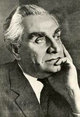
Alexandrov, Alexander b. April 13, 1883 d. July 8, 1946 Conductor, Composer. Founder of the famed Red Army Choir and composer of Russia's national anthem. Alexander Vasilyevich Alexandrov was born in Plakhino, near Moscow. He trained as a choirboy at St. Petersburg's Kazan Cathedral and later studied at the Moscow Conservatory, where he became a professor in 1918. In 1928 he organized the small Red Army Song Ensemble to boost morale and encourage amateur music-making among the soldiers; it quickly won the patronage of dictator Josef Stalin and by...[Read More] (Bio by: Robert Edwards) Novodevichy Cemetery, Moscow, Moscow Federal City, Russian Federation Plot: Section 3
Alexandrov, Grigori b. February 23, 1903 d. December 16, 1983 Motion Picture Director. Best known for his glitzy musical-comedies of the 1930s, the first of their kind in Soviet Cinema. Born Grigori Mormonenko in Yekaterinburg, Russia, he started out as a provincial actor and acrobat and entertained Red Army troops during the Russian Civil War. In 1921 he joined the Proletkult Theatre in Moscow and became friends with its young director, Sergei Eisenstein, whom he later followed into the cinema. Alexandrov served as Eisenstein's chief assistant and co-...[Read More] (Bio by: Robert Edwards) Novodevichy Cemetery, Moscow, Moscow Federal City, Russian Federation Plot: Section 3
Allilujewa-Stalina, Nadezhda Sergejevna b. September 22, 1901 d. November 9, 1932 She was the second wife of Josiph Vissarionovich Stalin. Stalin married Allilujeva in 1918, and she was young enough to be his daugter. Allilujewa never fit in the political environment of her husband, she became outsider and she was very unhappy. She was found dead in her sleeping room with one revolver in her hand. At that time (1932) the official version of her death was suicide. But a lot of facts pointed to murder. The death of Stalin's second and last wife remains for all time a secret. Novodevichy Cemetery, Moscow, Moscow Federal City, Russian Federation Plot: entering the cemetery turn to the right. You will always find the flowers on her grave
Annenkov, Nikolay b. September 20, 1899 d. September 30, 1999 Actor. He was born in Inzhaviono, Russia. He become one of the leading actors of the Russian stage, and was named People's Artist of the USSR in 1960. His career spanned from 1922 to his death in 1999, appearing in more than 200 roles with the Maly Theater. In cinema, he appeared in "Giber Orla" (1940), "Varvary" (1953), "Dachniki" (1967), "Opoznanie" (1973) and "Poema o Krylyakh" (1979). He celebrated his 100 birthday on stage, but died shortly after. (Bio by: José L Bernabé Tronchoni) Novodevichy Cemetery, Moscow, Moscow Federal City, Russian Federation
Arkhipova, Irina b. December 2, 1925 d. February 11, 2010 Opera Singer. A mezzo soprano, she was for many years a star of Moscow's Bolshoi Opera while earning acclaim in the world's leading venues. Raised in Moscow, she graduated with a degree in architecture from the Moscow Institute in 1948; having musical ambitions, she studied at the Moscow Conservatory before commencing her professional career with the Sverdlovsk Opera in 1954. There, she refined her skills and first presented what were to become her signature pieces in the Russian, French, and...[Read More] (Bio by: Bob Hufford) Novodevichy Cemetery, Moscow, Moscow Federal City, Russian Federation
Babochkin, Boris b. January 18, 1904 d. July 27, 1975 Actor, Director. He won international fame in the title role of "Chapaev" (1934), the most financially successful Soviet film of the 1930s. Babochkin's commanding yet lovable performance raised the real-life Civil War hero to lasting status as a Russian pop culture icon. Boris Andreyevich Babochkin was born in Saratov, Russia. During the Civil War he served with the Red Army along the Volga and in the Urals under the...[Read More] (Bio by: Robert Edwards) Novodevichy Cemetery, Moscow, Moscow Federal City, Russian Federation Plot: Section 2
Bagritsky, Eduard b. November 3, 1895 d. February 16, 1934 Poet. One of the few Soviet authors to write in the late romantic tradition. He celebrated post-revolutionary life in the USSR with an exuberant yet unsentimental lyricism. His long narrative poem "The Lay of Opanas" (1926), written in the style of a Ukrainian folk epic and set during the Russian Civil War, is considered his masterpiece. Bagritsky was the pen name of Eduard Georgiyevich Dzjubin, born into a Jewish family in Odessa, Ukraine. He earned a degree as a land surveyor but...[Read More] (Bio by: Robert Edwards) Novodevichy Cemetery, Moscow, Moscow Federal City, Russian Federation Plot: Section 1, Row 1
Baibakov, Nikolai Konstantinovich b. March 6, 1911 d. March 31, 2008 Economist, Statesman. The last Stalin-Era Russian Commissar. Born in the Sabunchi District of Baku, Russian Empire (now Azerbaijan) to an oil driller, he graduated from the Azerbaijan Oil and Chemistry Institute in 1932 as a mining engineer. He completed his compulsary military service from 1935 to 1937, after which he held various engineering and administrative jobs in the petroleum industry. During World War II he was in charge of evacuating oil industry facilities to the eastern regions to...[Read More] (Bio by: Fred Beisser) Novodevichy Cemetery, Moscow, Moscow Federal City, Russian Federation
Batalov, Nikolai b. December 6, 1899 d. November 10, 1937 Actor. Charismatic Soviet star of stage and screen. From 1916 he was a fixture of the Moscow Art Theatre troupe, making a name for himself in its Second Theatre under the direction of Mikhail Chekhov. His greatest triumphs were in the long-running production of Vsevolod Ivanov's "Armored Train 14-69" (1926) and in the title role of "The Marriage of Figaro" (1930), co-starring his wife Olga Androvskaya as Susanna. Batalov's film appearances were few but memorable. They include "Aelita" (1924)...[Read More] (Bio by: Robert Edwards) Novodevichy Cemetery, Moscow, Moscow Federal City, Russian Federation Plot: Section 2, Row 15 (MAT Plot)
Batitski, Pavel Fedorovich b. June 27, 1910 d. February 17, 1984 Soviet General. He was born in the Ukrainian city of Kharkov and joined the Red Army in 1924. He attended the Frunze Military Academy and spent his early years as a member of the Russian Calvary. He was the commanding officer of the 254th, 73rd, 128th, and 50th rifle divisions during the Second World War, serving on the Ukrainian and Belorussian fronts. He was a central figure in helping to liberate the Ukraine, Moldavia, Belorussian, Poland and Czechoslovakia from German occupation forces, and...[Read More] (Bio by: Nils M. Solsvik Jr.) Novodevichy Cemetery, Moscow, Moscow Federal City, Russian Federation
Bayanova, Alla b. May 18, 1914 d. August 30, 2011 Singer. A noted folk and Cabaret artist sometimes compared to Edith Piaf, she had a career of nearly nine decades. The child of an opera singer father and a ballerina mother, she received her initial vocal training at home and started performing at nine, at first appearing with her father who by then had switched to nightclubs. By 13 she was soloing and assisting Alex Vertinsky in his Montmarte shows, then after the family relocated to Belgrade in 1929 Alla soon found herself headlining at the...[Read More] (Bio by: Bob Hufford) Novodevichy Cemetery, Moscow, Moscow Federal City, Russian Federation
Bedny, Demyan b. April 13, 1883 d. May 25, 1945 Poet. Largely forgotten today, he once ranked among the Soviet Union's most famous authors. His simple, song-like topical verses, filled with slapstick wit and satire, were widely read in the 1920s and 1930s. Boris Pasternak claimed he saw "the spirit of the people" in his work. Born Yefim Alekseyevich Pridvorov in Gubovka, Ukraine, he studied at St. Petersburg University and became a committed liberal after the failed 1905 Russian Revolution. He adopted the pseudonym Demyan Bedny, which...[Read More] (Bio by: Robert Edwards) Novodevichy Cemetery, Moscow, Moscow Federal City, Russian Federation
Bely, Andrei b. October 26, 1880 d. August 1, 1934 Author. Real name Boris Nikolayevich Bugayev. A leading member of Russia's Symbolist movement, he took on the name Andrei Bely (which means "Andrew White") when he published his first poems in 1901. His novel "Petersburg", rewritten three times between 1913 and 1922, is considered one of the great masterpieces of 20th Century literature. Set during the 1905 Russian Revolution, the plot concerns a young anarchist who is ordered to assassinate his father, an important Czarist official; but...[Read More] (Bio by: Robert Edwards) Novodevichy Cemetery, Moscow, Moscow Federal City, Russian Federation Plot: Section 3
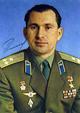
Belyayev, Pavel I. b. June 26, 1925 d. January 10, 1970 Cosmonaut. Born in Chelishchevo, Russia, he was a veteran of the Soviet Air Force and became a Cosmonaut in 1960. On March 18, 1965, he made history when as comander of Voskhod 2, his co-pilot Cosmonaut Aleksey Leonov while in orbit, stepped from the vehicle and performed mankind's first "walk in space". Belyayev died in 1970, of a stomach ulcer and is regarded as a National hero. A crater on the moon and an asteroid are named after him. (Bio by: John "J-Cat" Griffith) Cause of death: Natural causes Novodevichy Cemetery, Moscow, Moscow Federal City, Russian Federation Plot: Section 3
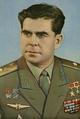
Beregovoi, Georgi T. b. April 15, 1921 d. June 30, 1995 Cosmonaut. Born Georgi Timofeyevich Beregovoi in Fedorovka, Poltava, Ukraine, he was a Soviet pilot during World War II and flew 185 combat missions. In the 1950s, he became a prominent test pilot flying zero-launch rocket-boosted fighters. He became a Cosmonaut in 1965 and on October 26, 1968, was the Commander of the Soyuz 3 mission becoming the oldest man in Space at age 47. From 1972 to 1986, he was Director of the Cosmonaut Training Center and retired a Lieutenant General from the Russian...[Read More] (Bio by: John "J-Cat" Griffith) Cause of death: Natural causes Novodevichy Cemetery, Moscow, Moscow Federal City, Russian Federation
Bernes, Mark Naumovich b. September 21, 1911 d. August 16, 1969 Actor, Singer. Born of Jewish ancestry, he became one of Russia's most popular cinema and recording artists. He was one of the first Soviet entertainers to perform for Russian troops during the Second World War, and during the Russian-Sino border dispute of the mid 1960s. He made his motion picture debut in the 1936 film "Prisoners." His other film credits include: "The Miners" (1937), "The Man with the Rifle" (1938), "The Fighters" (1939), "A Great Life" (1940), Diary of a Nazi" (1942), "Two...[Read More] (Bio by: Nils M. Solsvik Jr.) Novodevichy Cemetery, Moscow, Moscow Federal City, Russian Federation Plot: Section 7