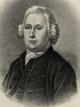
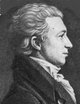
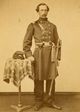
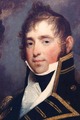
Alexander, William b. 1726 d. January 15, 1783 Revolutionary War Continental Army Major General. Also known as Lord Stirling. A member of the New York Militia, he was an aide-de-camp to Massachusetts Governor William Shirley in 1755 and 1756. Although his claim to the title of Lord Stirling was denied by Parliament in 1767 he was thereafter referred to by that title. As a colonel in the New Jersey militia, he committed to the patriot cause in 1775. He commanded the defense of New York City, was taken prisoner at the battle of Long Island...[Read More] (Bio by: Beth Painter) Trinity Churchyard, Manhattan, New York County, New York, USA Plot: Vault 1783-1A
Astor, John Jacob b. July 17, 1763 d. March 29, 1848 Businessman, Merchant, Investor. He became the first multi-millionaire and creator of the first trust in the United States as a result of his fur business, the American Fur Company. Born Johann Jakob Astor in what is now known as Waldorf, in the state of Baden-Wurttemberg, Germany, he began working as an assistant in his father's dairy business. In 1779, he emigrated to London, England, where he worked for an older brother, George Astor, who manufactured musical instruments. While there, he...[Read More] (Bio by: William Bjornstad) Trinity Churchyard, Manhattan, New York County, New York, USA
Bland, Theodorick [original burial site] b. March 21, 1742 d. June 1, 1790 US Congressman. Elected to represent Virginia's 9th District in the First Congress, he served from 1789 until his death. He was the first US Congressman to die in office. Bland was born at Cawsons in Prince George County, Virginia, into a family of notable planters and politicians. His uncle was Continental Congressman Richard Bland. After receiving a classical education in England, he studied medicine in Edinburgh and returned home to work as a physician. During the Revolution he...[Read More] (Bio by: Robert Edwards) Trinity Churchyard, Manhattan, New York County, New York, USA
Bradford, William b. 1663 d. May 23, 1752 Pioneer American Publisher. Bradford established the American colony's first press, in Philadelphia, after his emigration from England in 1683. He defended press freedom and was tried for sedition in 1692. He was not convicted and moved to New York where he became a Trinity Vestryman in 1703. He created the first edition of the Book of Common Prayer to be printed in America in 1710. (Bio by: clee550) Trinity Churchyard, Manhattan, New York County, New York, USA
Churcher, Richard b. 1676 d. 1681 Richard Churcher died 16 years before Trinity Churchyard was incorporated. He is buried in what became the north churchyard. There are many icons that symbolize the shortness of life on his gravestone: a skull and crossbones, a winged hourglass, an imitation of a seventeenth-century English bedstead carved at the top of the stone. His grave is the oldest in Trinity Churchyard. (Bio by: clee550) Trinity Churchyard, Manhattan, New York County, New York, USA
Cresap, Michael b. April 17, 1742 d. October 18, 1775 Pre-Revolutionary War Hero. Lived in Ohio part of his adult life as a frontiersman and land developer. Later, he commanded a company of Maryland riflemen in the Continental Army at Cambridge Massachusetts. He was commissioned a Colonel under George Washington during the American Revolutionary War and died in service of the Army. (Bio by: Tim Joyce) Trinity Churchyard, Manhattan, New York County, New York, USA Plot: Section 6 Northside
Fellows, John R. b. July 29, 1832 d. December 7, 1896 US Congressman. A native of Troy, New York, he served in the Confederate Army during the Civil War. Elected to represent New York's 6th and 14th Districts in the United States House of Representatives, he served from 1891 to 1893. He also served as a Delegate to the Arkansas Secession Convention in 1861, and as a Member of the Arkansas State Senate from 1866 to 1867 (Bio by: K) Trinity Churchyard, Manhattan, New York County, New York, USA
Fulton, Robert b. November 14, 1765 d. February 24, 1815 Inventor, Artist. While not the inventor of the steamboat, he was very instrumental in constructing a steamboat named the "Clermont",and parlaying it into a commercial success with the first permanent commercial route in history on the Hudson River. Chancellor Robert R. Livingston backed the venture with his financial and political influence. He was born near the town, on a farm...[Read More] (Bio by: Donald Greyfield) Trinity Churchyard, Manhattan, New York County, New York, USA Plot: Northern Section, Livingston family vault 1815-3B
Gallatin, Albert b. January 29, 1761 d. August 12, 1849 Albert Gallatin was born into an aristocratic Swiss family, but gave up fortune and social position and emigrated to America in 1780, where he might "drink in a love for independence in the freest country of the universe". Following fifteen years of being involved in various business ventures and teaching French at Harvard, Gallatin was elected to Congress from Pennsylvania in 1795. As a member of Congress, he made the Treasury Department and its control the object of constant scrutiny and...[Read More] (Bio by: Craig Johnson) Trinity Churchyard, Manhattan, New York County, New York, USA
Gates, Horatio b. July 26, 1727 d. April 10, 1806 Revolutionary War Continental General. Born in Essex, England, he entered the British Army as a boy and received a Lieutenant's commission in 1745. He served in Germany during the War of the Austrian Succession and was promoted to Captain in 1753. Coming to the colonies in America, he fought in the French and Indian War, later served in the West Indies and retired from the British Army as a Major. In 1763, he emigrated to America and purchased an estate in Virginia. With the outbreak of the War...[Read More] (Bio by: John "J-Cat" Griffith) Trinity Churchyard, Manhattan, New York County, New York, USA Plot: location of grave is unknown
Hacker, Capt. Hoysted b. December 24, 1745 d. July 19, 1814 US Continental Navy Captain. Born in Providence, Rhode Island to prominent merchant Joshua Hacker and wife Martha. Learned to sail as a youth and until 1775, ran merchant ship packets for the family enterprise in Rhode Island. When Congress was organizing a navy, he was recommended as a candidate. Along with four other candidates including J. Paul Jones, he was commissioned Lieutenant at the official formation of the Continental Navy on December 22, 1775. He was promoted to Captain on October...[Read More] (Bio by: Raymond C Kogge, SAR) Trinity Churchyard, Manhattan, New York County, New York, USA
Hackley Jr., Aaron b. May 6, 1783 d. December 28, 1868 US Congressman. Elected to represent New York's 17th District in the United States House of Representatives, he served from 1819 to 1821. He also served as a Member of the New York State Assembly from 1814 to 1818, and in 1837, and as a County Judge from 1823 to 1824. (Bio by: K) Trinity Churchyard, Manhattan, New York County, New York, USA
Hamilton, Alexander b. January 11, 1755 d. July 12, 1804 Founding Father, Statesman. The thirteen states after the Revolutionary War were weak and still separate. Alexander Hamilton was the strong voice calling for a strong united government with a new Constitution and then most instrumental in the formation and convening of the Constitutional Convention at Philadelphia which established the United States of America. He was born southeast of Florida on Nevis, a small island making up the group in the Caribbean known as the West Indies. His mother...[Read More] (Bio by: Donald Greyfield) Trinity Churchyard, Manhattan, New York County, New York, USA
Hamilton, Elizabeth b. August 9, 1757 d. November 9, 1854 Wife of Alexander Hamilton. She was the daughter of Revoluntionary War Continental General Philip Schuyler and sister to Angelica Schuyler Church. She was the mother of eight children, including Philip Hamilton, who died in a duel at Weehauken on the same field on which her husband would later lose his life. She was a remarkable woman, outliving her...[Read More] (Bio by: The Raven) Trinity Churchyard, Manhattan, New York County, New York, USA Plot: Unavailable at this time.
Hobart, John Sloss b. May 6, 1738 d. February 4, 1805 US Senator. Served as a United States Senator from New York in 1798. Also served as Justice of the New York Supreme Court from 1777 to 1798, and Judge of the United States District Court for New York in 1798. (Bio by: K) Trinity Churchyard, Manhattan, New York County, New York, USA
Hogan, William b. July 17, 1792 d. November 25, 1874 US Congressman. Elected to represent New York's 19th District in the United States House of Representatives, he served from 1831 to 1833. He also served as a Member of the New York State Assembly in 1822, and as a State Court Judge in 1829. (Bio by: K) Trinity Churchyard, Manhattan, New York County, New York, USA
Lamb, Gen. John b. January 1, 1735 d. May 31, 1800 American General. Before the outbreak of the Revolution, Lamb was a trader in liquors. He married Catherine Jardine about 1760, and shortly thereafter, when troubles began with the British, he joined the Sons of Liberty. At the start of the American Revolutionary War, Lamb was commissioned a captain of the New York artillery. He fought at the Battle of Quebec in 1775, where he was wounded and captured. Released months later, Lamb was a major and then, in 1777, colonel of the 2nd Continental...[Read More] (Bio by: Dan Silva) Trinity Churchyard, Manhattan, New York County, New York, USA Plot: SECTION S1d, Southside
Lawrence, James b. October 1, 1781 d. June 1, 1813 War of 1812 United States Naval Officer. He commanded the frigate "USS Chesapeake" in its battle with the British Royal Navy frigate "HMS Shannon". After a fierce fight the Shannon defeated Captain Lawrence's command, and he was mortally wounded. His dying words "Don't Give Up The Ship" became a rallying cry during the war, and has achieved legend status in American history. Cause of death: Killed in Action in the War of 1812 Trinity Churchyard, Manhattan, New York County, New York, USA
Lewis, Francis b. 1713 d. December 30, 1803 Signer of the Declaration of Independence from New York. Born in Llandaff, Wales, Great Britain, and both of his parents died when he was young. Francis grew up with relatives in Wales, and went to school in London. As a young man, he worked in a London counting house. In his twenties, he turned to being a merchant, and made a good living. He came to America in 1738, settling in New York City, where he became a wealthy merchant. In 1745, he married Elizabeth Annesley, his partner's sister...[Read More] (Bio by: Kit and Morgan Benson) Trinity Churchyard, Manhattan, New York County, New York, USA