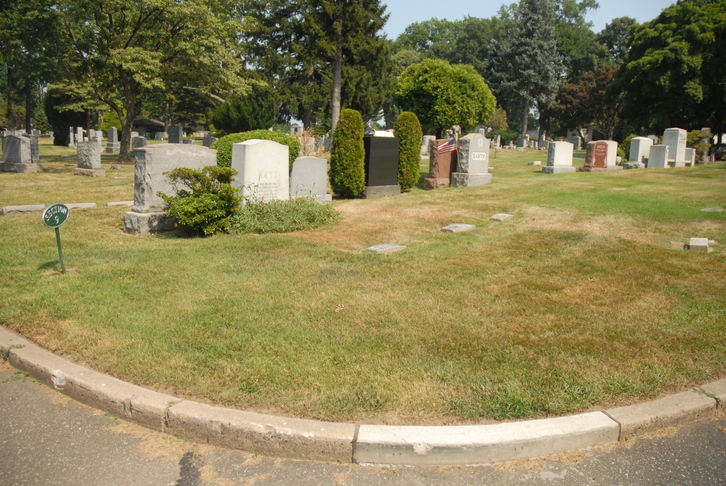
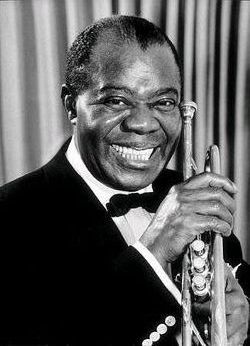
Jazz Musician, Singer and Vocalist. Born in the slums of segregated New Orleans, Louisiana, neglected, with no supervision, he spent most of his time on the streets, singing with neighborhood kids for loose change and searching garbage cans for food. Delinquency landed him in the New Orleans Waif's Home, where, under the tutelage of the Home's band instructor, he received his first formal music lessons and was given his first cornet. His release from the facility found him completely unprepared, and, having no formal education, he was forced into doing odd jobs to survive, selling papers, unloading boats, and hauling coal. Determined to become a musician, Armstrong frequented many honky-tonks and dance halls which led him to Joe Oliver who became a pivotal figure, taking on the role of mentor, teacher, and father to Louis and, above all, at age 18, a member of the "Kid Ory Band." Oliver, now a well-known Jazz artist in Chicago, Illinois, asked Armstrong to join his band at Lincoln Gardens in 1922 where he made his first recordings. In 1925, he organized his own first band, while switching from the cornet to the trumpet, the "Hot Five" and recorded his first album. During the tenure of the group, Armstrong gave rise to the solo as the centerpiece in Jazz music. After his 1932 Grand Tour of Europe, a London, England, music magazine editor inadvertently wrote "Satchmo" in referring to his then-moniker "Satchelmouth," giving rise to the nickname he would carry for the rest of his life. By the 1940s, the era of the Big Band was over and Armstrong organized a small band called the "Louis Armstrong All Stars," which became one of the most well-known Jazz groups in history, playing in many countries in clubs, festivals, and concert halls until disbanding just prior to the death of Armstrong. In 1931, he began a motion picture career, appearing in "Ex-Flame," and would go on to appear in fifteen others, such as "Pennies From Heaven," "Everyday's a Holiday," "New Orleans," "The Five Pennies," "The Beat Generation," "Paris Blues," and "Hello Dolly." Between 1950 and the 1970s, he was a television mainstay, appearing on programs such as "The Ed Sullivan Show," "Timex Show," "Bing Crosby Oldsmobile Show," "What's My Line?" "The Dean Martin Show," "The Tonight Show" and "Kraft Music Hall." His biggest hits as a recording artist came late in his life: "Mack the Knife" (1956), "Hello, Dolly!" (number one hit in 1964), "What a Wonderful World" (1968), and "We Have All The Time In The World" (20 years after his death). He performed during the 1960s doing a string of performances in which he barely played the trumpet, mostly singing and talking to the audience between numbers. By 1970, his health had declined to the point where he could not play at all, and could only walk a few steps at a time. He passed away of a massive heart attack at his home in Corona, Queens. His funeral in New York at the National Guard Armory attracted a crowd of 25,000 and was attended by many entertainers, musicians, and politicians, including Bing Crosby, Ella Fitzgerald, Guy Lombardo, Duke Ellington, Dizzy Gillespie, Count Basie, Frank Sinatra, and Johnny Carson. Later, his hometown of New Orleans staged a memorial service in the French Quarter, culminating, in his honor, the traditional Jazz funeral march down Bourbon Street. His posthumous honors included a record star on the Hollywood Walk of Fame, a 1978 Charter induction into the Big Band and Jazz Hall of Fame, induction into the Rock and Roll Hall of Fame in 1990 under the Early Influences category, a 1995 United States Postal Service commemorative stamp honoring him in their "Legends of American Music" series, and the 2000 renaming of New Orleans International Airport the Louis Armstrong New Orleans International Airport. His first autobiography "Swing That Music" was published in 1936 followed by his second, "Satchmo: A Musical Autobiography" published in 1954. Armstrong has a star on the Hollywood Walk of Fame at 7018 Hollywood Blvd.
Jazz Musician, Singer and Vocalist. Born in the slums of segregated New Orleans, Louisiana, neglected, with no supervision, he spent most of his time on the streets, singing with neighborhood kids for loose change and searching garbage cans for food. Delinquency landed him in the New Orleans Waif's Home, where, under the tutelage of the Home's band instructor, he received his first formal music lessons and was given his first cornet. His release from the facility found him completely unprepared, and, having no formal education, he was forced into doing odd jobs to survive, selling papers, unloading boats, and hauling coal. Determined to become a musician, Armstrong frequented many honky-tonks and dance halls which led him to Joe Oliver who became a pivotal figure, taking on the role of mentor, teacher, and father to Louis and, above all, at age 18, a member of the "Kid Ory Band." Oliver, now a well-known Jazz artist in Chicago, Illinois, asked Armstrong to join his band at Lincoln Gardens in 1922 where he made his first recordings. In 1925, he organized his own first band, while switching from the cornet to the trumpet, the "Hot Five" and recorded his first album. During the tenure of the group, Armstrong gave rise to the solo as the centerpiece in Jazz music. After his 1932 Grand Tour of Europe, a London, England, music magazine editor inadvertently wrote "Satchmo" in referring to his then-moniker "Satchelmouth," giving rise to the nickname he would carry for the rest of his life. By the 1940s, the era of the Big Band was over and Armstrong organized a small band called the "Louis Armstrong All Stars," which became one of the most well-known Jazz groups in history, playing in many countries in clubs, festivals, and concert halls until disbanding just prior to the death of Armstrong. In 1931, he began a motion picture career, appearing in "Ex-Flame," and would go on to appear in fifteen others, such as "Pennies From Heaven," "Everyday's a Holiday," "New Orleans," "The Five Pennies," "The Beat Generation," "Paris Blues," and "Hello Dolly." Between 1950 and the 1970s, he was a television mainstay, appearing on programs such as "The Ed Sullivan Show," "Timex Show," "Bing Crosby Oldsmobile Show," "What's My Line?" "The Dean Martin Show," "The Tonight Show" and "Kraft Music Hall." His biggest hits as a recording artist came late in his life: "Mack the Knife" (1956), "Hello, Dolly!" (number one hit in 1964), "What a Wonderful World" (1968), and "We Have All The Time In The World" (20 years after his death). He performed during the 1960s doing a string of performances in which he barely played the trumpet, mostly singing and talking to the audience between numbers. By 1970, his health had declined to the point where he could not play at all, and could only walk a few steps at a time. He passed away of a massive heart attack at his home in Corona, Queens. His funeral in New York at the National Guard Armory attracted a crowd of 25,000 and was attended by many entertainers, musicians, and politicians, including Bing Crosby, Ella Fitzgerald, Guy Lombardo, Duke Ellington, Dizzy Gillespie, Count Basie, Frank Sinatra, and Johnny Carson. Later, his hometown of New Orleans staged a memorial service in the French Quarter, culminating, in his honor, the traditional Jazz funeral march down Bourbon Street. His posthumous honors included a record star on the Hollywood Walk of Fame, a 1978 Charter induction into the Big Band and Jazz Hall of Fame, induction into the Rock and Roll Hall of Fame in 1990 under the Early Influences category, a 1995 United States Postal Service commemorative stamp honoring him in their "Legends of American Music" series, and the 2000 renaming of New Orleans International Airport the Louis Armstrong New Orleans International Airport. His first autobiography "Swing That Music" was published in 1936 followed by his second, "Satchmo: A Musical Autobiography" published in 1954. Armstrong has a star on the Hollywood Walk of Fame at 7018 Hollywood Blvd.
Bio by: Donald Greyfield
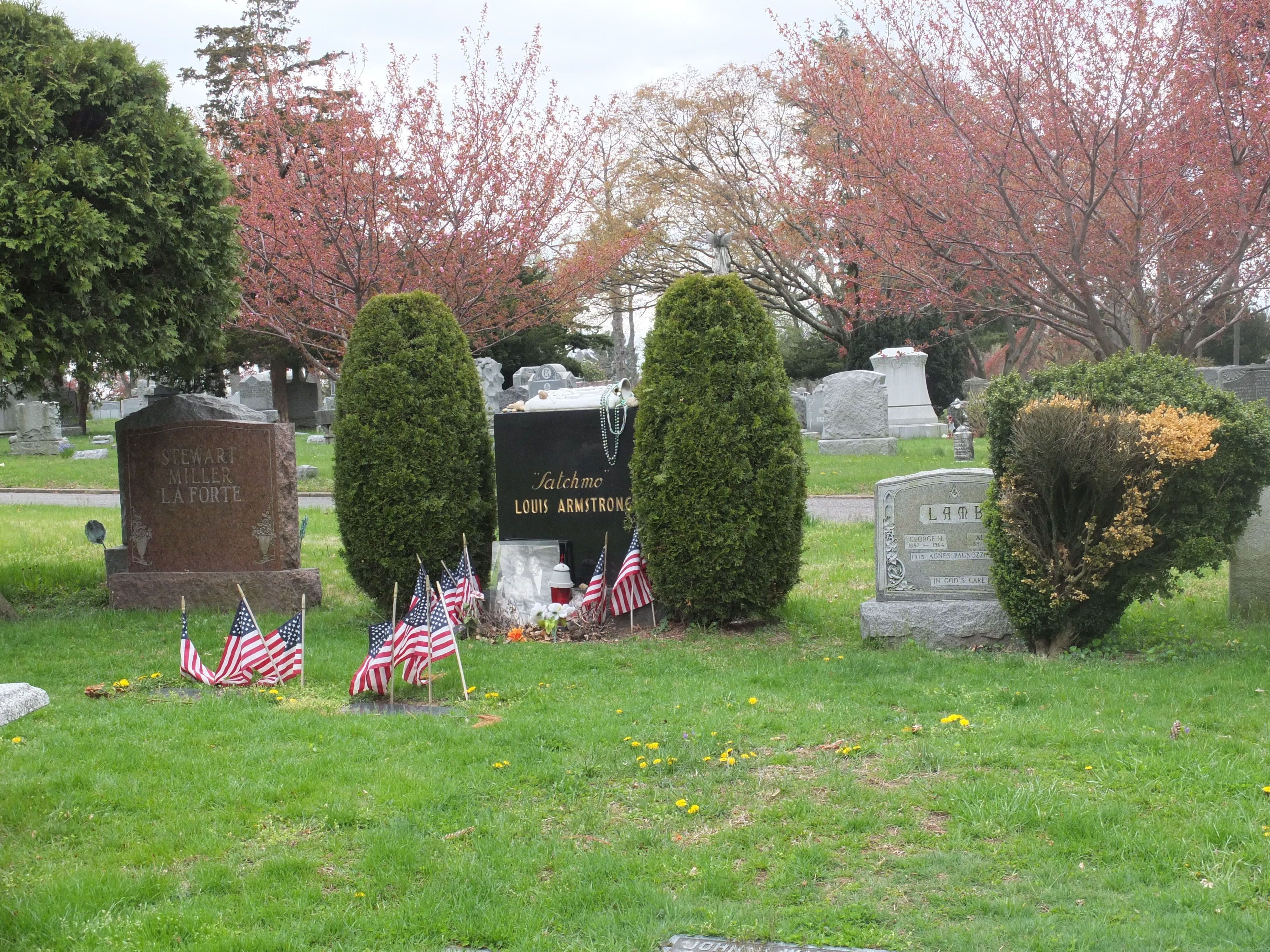
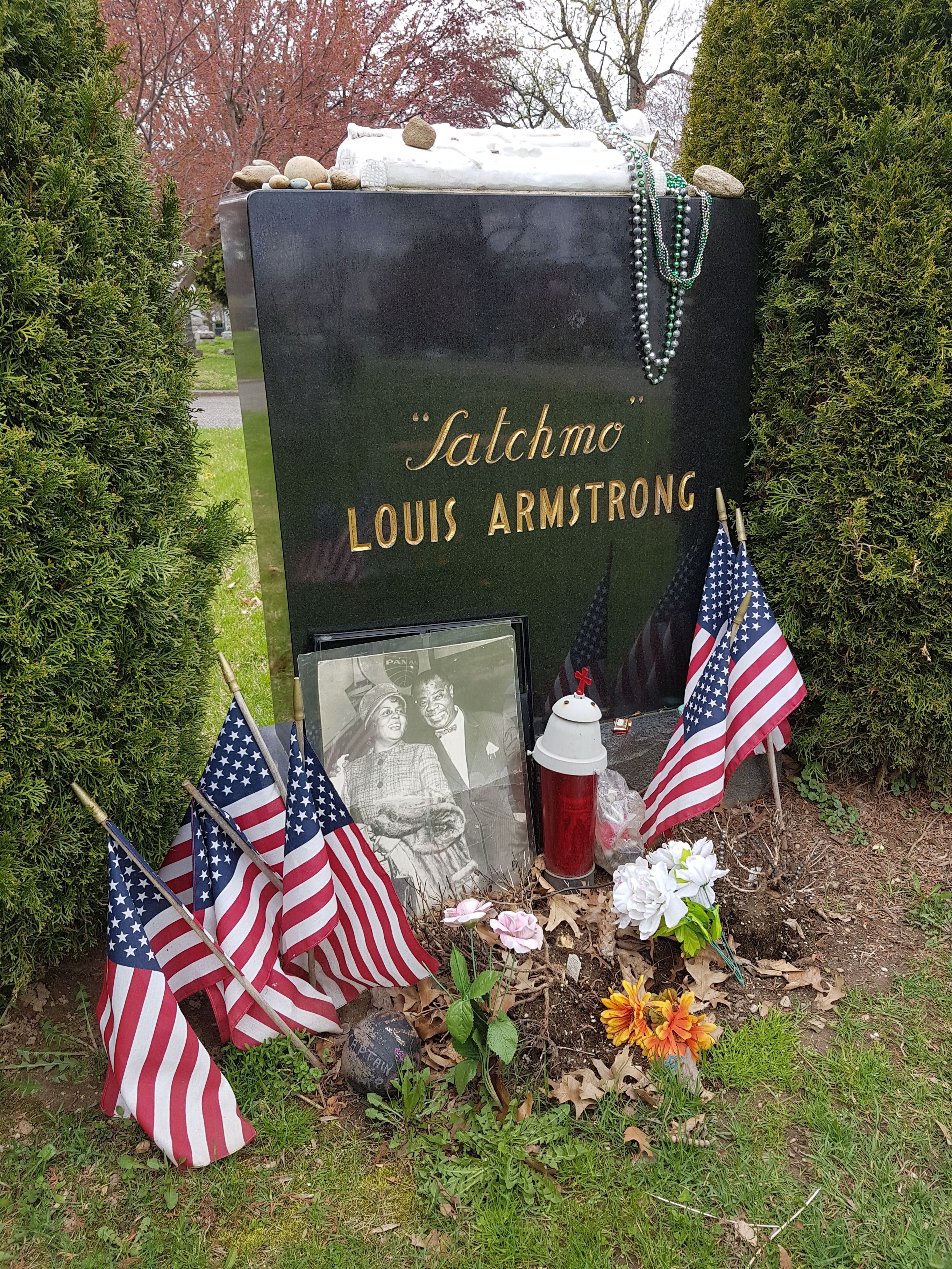
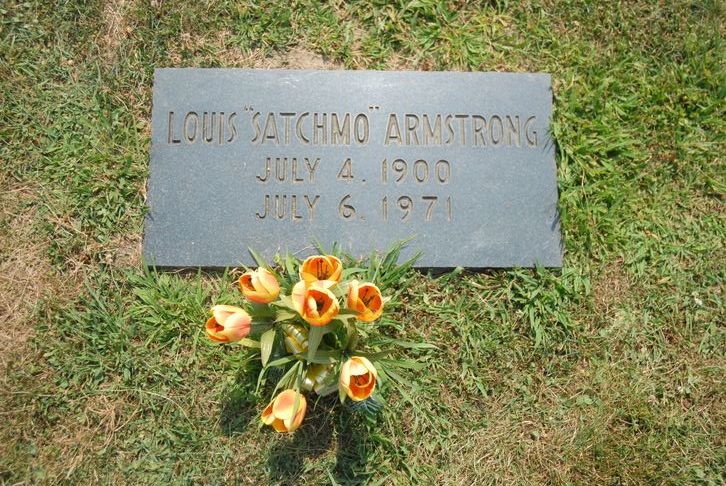
Inscription
"Satchmo"
Family Members


Advertisement
See more Armstrong memorials in:
Explore more
Sponsored by Ancestry
Advertisement