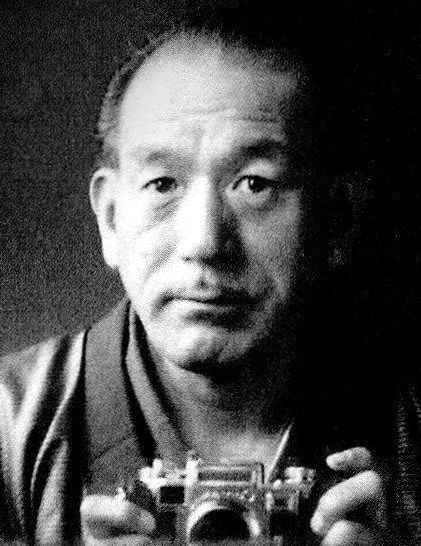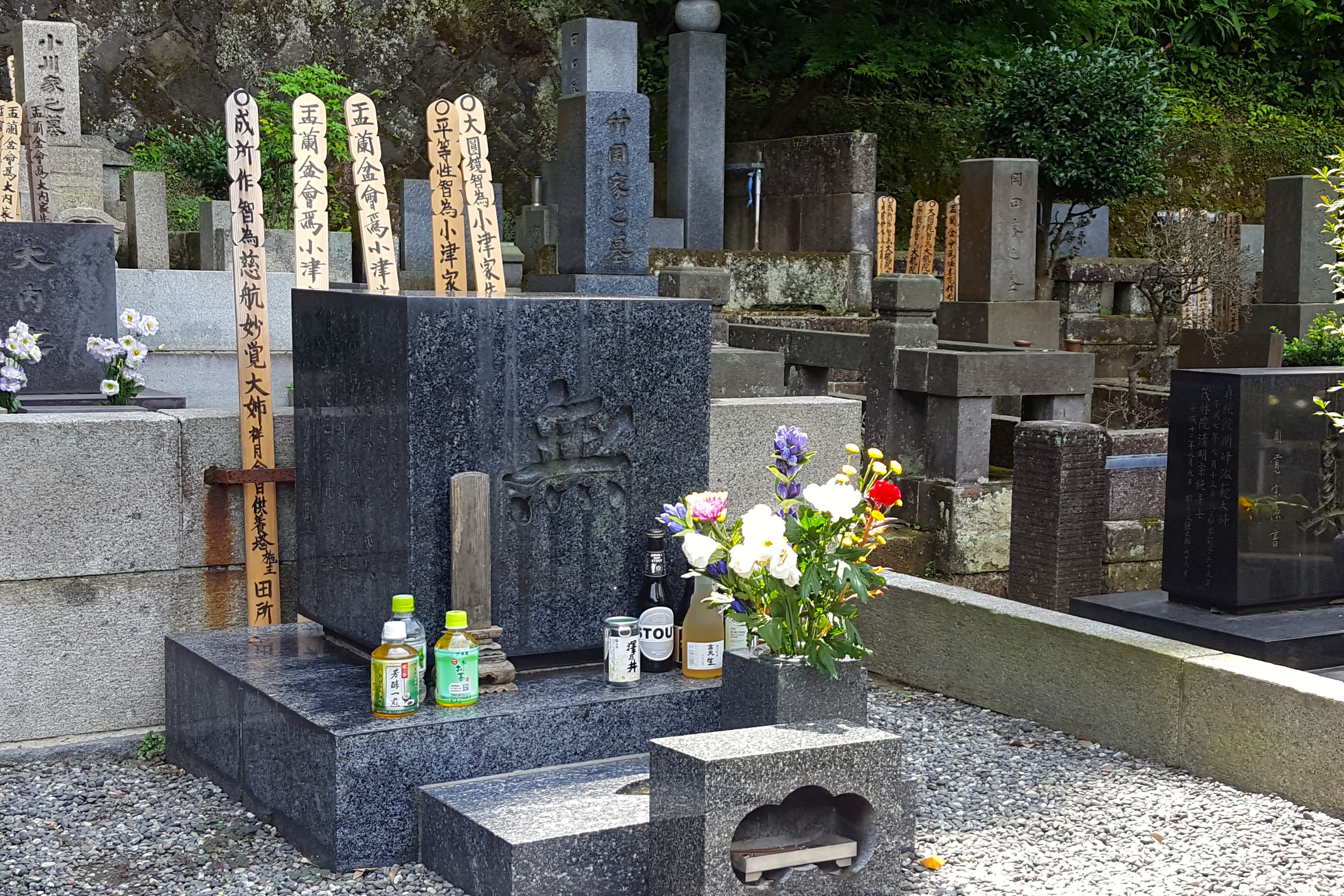
Motion Picture Director, Screenwriter. Born in Tokyo, the son of an emotionally distant businessman, he was movie crazy from boyhood and often skipped school to watch Hollywood films. At age 20, he got a job as a camera assistant at the Shochiku studio and three years later was promoted to assistant director; he made his directorial debut with "Sword of Penitence" (1927). Ozu turned out 35 silent features (half of them now lost) over the next decade, establishing himself as a major talent with a trilogy of seriocomic studies of youth - "I Graduated but..." (1929), "I Flunked but..." (1930), and "I Was Born but..." (1932) - and the award-winning "Passing Fancy" (1933). "The Only Son" (1936) was his first talkie. He was conscripted into the Japanese Imperial Army twice, serving in China (1937 to 1939) and in Singapore during World War II (WWII), during which he got to view confiscated American films. In 1945, he was captured by the British and spent six months in a POW camp. He returned to the Shochiku studio a mature artist and from then on carefully crafted one film a year, co-writing his scripts. "Tokyo Story" (1953), which won the British Film Institute's Sutherland Trophy in 1958, is considered his masterpiece and frequently turns up on critics' lists of the greatest films ever made. His other important credits include "Late Spring" (1949), "The Munekata Sisters" (1950), "The Flavor of Green Tea Over Rice" (1952), "Tokyo Twilight" (1957), "Equinox Flower" (1958), "Floating Weeds" (1959), and "An Autumn Afternoon" (1962). Ozu never married and lived with his mother until her death in 1962. He died of cancer the following year, on his 60th birthday. For most of his career Ozu had one major subject, the Japanese middle class family, through which he explored conflicts between young and old, tradition and modernization, with a stoic awareness of the transitory nature of all things. The lives of his characters are detailed with quiet depth and poignancy. To emphasize his thematic concerns he developed a visual style that is haiku-like in its apparent simplicity, consisting of long static shots taken from a low angle; he rarely employed camera movement, fades or dissolves, and had no use for montage editing. Most idiosyncratic is his avoidance of the "180-degree rule" of camera placement to maintain narrative continuity. Ozu filmed his scenes in a 360-degree space so that, for example, characters supposedly facing each other in seperate shots would appear instead to be looking in the same direction, a disorienting effect but one that makes dramatic sense within the context of his work. The "dignified severity" (Akira Kurosawa's words) of Ozu's style made Japanese distributors reluctant to release his films abroad, and apart from "Tokyo Story" they were little known in the west until the late 1960s. Today, he is ranked among the greats of world cinema.
Motion Picture Director, Screenwriter. Born in Tokyo, the son of an emotionally distant businessman, he was movie crazy from boyhood and often skipped school to watch Hollywood films. At age 20, he got a job as a camera assistant at the Shochiku studio and three years later was promoted to assistant director; he made his directorial debut with "Sword of Penitence" (1927). Ozu turned out 35 silent features (half of them now lost) over the next decade, establishing himself as a major talent with a trilogy of seriocomic studies of youth - "I Graduated but..." (1929), "I Flunked but..." (1930), and "I Was Born but..." (1932) - and the award-winning "Passing Fancy" (1933). "The Only Son" (1936) was his first talkie. He was conscripted into the Japanese Imperial Army twice, serving in China (1937 to 1939) and in Singapore during World War II (WWII), during which he got to view confiscated American films. In 1945, he was captured by the British and spent six months in a POW camp. He returned to the Shochiku studio a mature artist and from then on carefully crafted one film a year, co-writing his scripts. "Tokyo Story" (1953), which won the British Film Institute's Sutherland Trophy in 1958, is considered his masterpiece and frequently turns up on critics' lists of the greatest films ever made. His other important credits include "Late Spring" (1949), "The Munekata Sisters" (1950), "The Flavor of Green Tea Over Rice" (1952), "Tokyo Twilight" (1957), "Equinox Flower" (1958), "Floating Weeds" (1959), and "An Autumn Afternoon" (1962). Ozu never married and lived with his mother until her death in 1962. He died of cancer the following year, on his 60th birthday. For most of his career Ozu had one major subject, the Japanese middle class family, through which he explored conflicts between young and old, tradition and modernization, with a stoic awareness of the transitory nature of all things. The lives of his characters are detailed with quiet depth and poignancy. To emphasize his thematic concerns he developed a visual style that is haiku-like in its apparent simplicity, consisting of long static shots taken from a low angle; he rarely employed camera movement, fades or dissolves, and had no use for montage editing. Most idiosyncratic is his avoidance of the "180-degree rule" of camera placement to maintain narrative continuity. Ozu filmed his scenes in a 360-degree space so that, for example, characters supposedly facing each other in seperate shots would appear instead to be looking in the same direction, a disorienting effect but one that makes dramatic sense within the context of his work. The "dignified severity" (Akira Kurosawa's words) of Ozu's style made Japanese distributors reluctant to release his films abroad, and apart from "Tokyo Story" they were little known in the west until the late 1960s. Today, he is ranked among the greats of world cinema.
Bio by: Bobb Edwards
Inscription
409, Yamanouchi
Kamakura, Kanagawa
Japan 247-0062
Advertisement
See more Ozu memorials in:
Records on Ancestry
Sponsored by Ancestry
Advertisement